 EN
EN

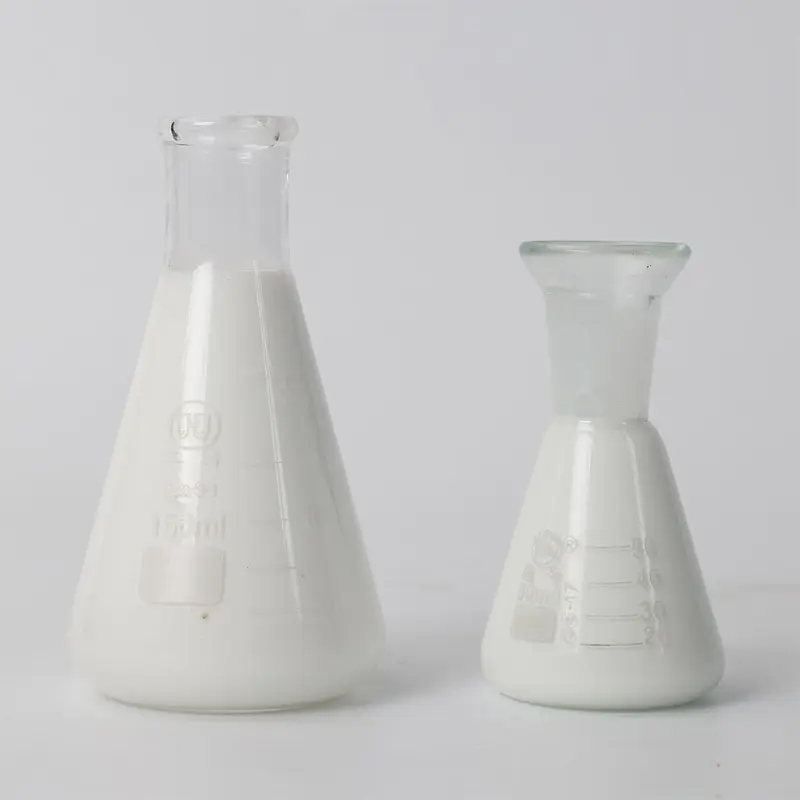
How Bond Strength Impacts Performance in Pressure-Sensitive Packaging Applications
Water based acrylic PSAs really stand out for their bonding power because they actually form connections at the molecular level with packaging materials almost instantly after being applied. The quick grab helps stop labels from moving around during fast production runs, cutting down on wasted products that get misaligned. We're talking about roughly 18% less waste than what happens with traditional rubber based glues according to research published last year in the Packaging Science Journal. What makes these adhesives so good is their ability to hold tight even on tough surfaces like recycled cardboard boxes. They stay put through all sorts of rough handling in shipping and storage including vibrations from trucks and fluctuations in warehouse temperatures.
Molecular Structure of Acrylic Polymers and Its Role in Adhesion Enhancement
The linear structure of polymer chains found in acrylic pressure sensitive adhesives allows them to spread quickly across porous materials. At the same time, those pesky carboxyl groups manage to hook onto cellulose fibers within paperboard through hydrogen bonding. Together these two effects produce bonds at interfaces that are somewhere between 30 and maybe even 40 percent stronger compared to what we see with traditional solvent based glues when applied to tricky surfaces like polyethylene. When manufacturers add cross linking agents into the mix, they're essentially creating this three dimensional network throughout the adhesive material. What does this mean practically? Well, it makes the glue much better at resisting shearing forces because the whole structure holds together even when subjected to continuous pressure over time.
Optimizing Monomer Composition for Balanced Peel Strength, Tack, and Shear Resistance
Modern adhesive formulas mix soft stuff like butyl acrylate for stickiness with harder materials like methyl methacrylate that keep things stable under stress. Recent tests from last year showed that getting around 65% soft material mixed with 35% hard stuff works best for peeling strength at about 12 Newtons per 25mm measurement point. What's interesting is that these mixtures can hold up against shear forces for well over three days even when temperatures reach 40 degrees Celsius. To help these adhesives work better on surfaces that repel water, manufacturers often attach special additives called rosin esters directly onto the main polymer structure. This grafting process makes the whole system play nicely together on tricky surfaces where regular glues might struggle.
Real-World Performance: High-Speed Label Application on Corrugated and Porous Surfaces
Water based acrylic PSAs work really well in automated packaging setups, getting over 98 percent success rate on recycled corrugated boxes even when running fast, sometimes above 1200 labels per minute. These adhesives have just the right balance between stickiness and flexibility so they don't leave strings behind, plus they dry super quick too about two seconds max at around 100 degrees Celsius which means cartons can be stacked right away without sticking together. We tested them on those little pill packages for medicines and found that all the seals stayed intact for six whole months during our accelerated aging tests under pretty humid conditions about 75 percent relative humidity.
Environmental and Safety Benefits of Water-Based Acrylic Pressure Sensitive Adhesives
Water based acrylic PSAs release around 70 percent fewer volatile organic compounds compared to their solvent based counterparts, which means better air quality and no risk of catching fire. These products meet all the requirements set out in FDA regulation 21 CFR 175.105 regarding contact with food stuffs, plus they follow EU REACH guidelines on chemical safety too. Traditional adhesive systems often need complex solvent recovery processes, but water based alternatives work much better within lean manufacturing setups. Plus they don't interfere with recycling efforts something that matters to about two thirds of shoppers who prefer eco friendly packaging options nowadays. From a safety standpoint, tests show these materials are basically harmless. The levels at which workers might be exposed during normal operations stay comfortably below what's considered safe for eight hour shifts, even when used in large scale production runs.
Cohesive Strength, Shear Resistance, and Long-Term Durability
Cross-linking mechanisms that improve creep and load-bearing resistance
Strategic cross-linking creates covalent bonds between acrylic chains, boosting cohesive strength by 35–50% over linear structures. This reinforcement enables resistance to loads up to 1.8 MPa without deformation–critical for heavy-duty seals. Research shows cross-linked networks reduce creep strain by 62% after 72 hours under 500g loads, outperforming rubber-based adhesives.
Long-term shear performance under warehouse storage conditions (40°C/75% RH)
Accelerated aging tests reveal acrylic PSAs retain 94% of initial shear resistance after six months at 40°C and 75% RH. Hydrophobic monomers limit water absorption to <2% by weight, preventing softening. Field data indicate holding times exceed 10,000 minutes on vertical cardboard–three times longer than solvent-based alternatives under the same conditions.
Oxidative and UV stability of acrylic polymers for extended shelf life
The acrylic backbone material has pretty good resistance to oxidation, maintaining around 90% of its tensile strength even after sitting around for 18 months without special protection. When manufacturers add those UV resistant additives like benzotriazole stabilizers, the results are impressive too. These modified versions only lose under 5% of their peel strength after spending 2000 hours under QUV-B testing conditions. That's actually three times better than what most polyurethane adhesives can manage. For companies dealing with printed labels that might get exposed to sunlight while being shipped or stored in warehouses, this kind of durability is a real game changer. No more worrying about faded or peeling labels ruining product appearances on store shelves.
Formulation advances: Antioxidants and hybrid systems for aging resistance
Hybrid systems incorporating nano-silica particles improve thermal degradation resistance by 68% at 60°C. Dual-action antioxidants like tris(nonylphenyl) phosphite scavenge free radicals, extending service life beyond seven years in archival applications. Recent integration of HALS (Hindered Amine Light Stabilizers) reduces yellowing by 82% while maintaining FDA compliance for food contact.
Processing Efficiency and Manufacturing Compatibility
Modern waterbased acrylic PSAs achieve 97% production line efficiency in high-volume operations thanks to optimized rheology. Viscosity profiles (1,500–4,000 mPa·s) allow uniform coating at speeds over 600 fpm without splattering or edge bleed.
Rheological Properties Enabling High-Speed Coating and Printing Processes
Shear-thinning behavior ensures smooth flow through slot die applicators while maintaining stability on vertical substrates. pH-stable formulations resist thickening during idle periods, enabling 18% faster changeovers compared to solvent-based systems.
Drying Optimization: Coalescing Agents and Oven Efficiency in Water-Based Lines
Balancing key drying parameters ensures film integrity:
| Parameter | Target Range | Impact on Performance |
|---|---|---|
| Oven zone temperatures | 60–90°C (140–194°F) | Prevents blistering in porous materials |
| Air velocity | 2.5–3.8 m/s | Maintains adhesive open time |
| Coalescent additive % | 1.2–2.8 wt% | Enhances film formation at lower temps |
Facilities using predictive drying algorithms report 22% energy savings while maintaining 99.4% coating quality on recycled paperboard, according to a 2023 Material Handling Institute report.
Integration With Flexographic and Digital Printing for Label and Tape Production
Compatibility with UV-curable inks prevents interlayer contamination in combined printing and lamination processes. Converters using hybrid digital-flexo lines report 15% higher throughput with waterbased acrylic PSAs compared to hot melts, especially in pressure-sensitive label production for temperature-sensitive goods.
Are you looking for a reliable partner to meet your high-performance adhesive needs? E Plus Chemical Co.,Ltd provides comprehensive custom OEM/ODM services for water-based acrylic resins. If you have specific formula ideas or need custom water-based acrylic pressure-sensitive adhesives tailored to your unique temperature and performance requirements, our expert team is ready to assist you and provide professional formula processing services.
FAQ
What are water based acrylic PSAs?
Water based acrylic PSAs (Pressure Sensitive Adhesives) are adhesives that form bonds at the molecular level, primarily designed for high-performance packaging applications.
How do water based acrylic PSAs benefit packaging?
They provide superior bond strength and instant tack, reducing waste and improving adhesive success rates on various surfaces, including recycled cardboard boxes.
Are water based acrylic PSAs environmentally friendly?
Yes, they release fewer volatile organic compounds, improve air quality, are fire-safe, and align with recycling and eco-friendly packaging efforts.
Which surfaces pose challenges to acrylic PSAs?
Low-energy substrates like polyethylene and PET films can be challenging due to poor wetting. However, tailored surface energy allows effective adhesion.
How long do water based acrylic PSAs last?
They retain over 94% of shear resistance after six months under specific environmental conditions and resist oxidation and UV damage effectively.
Table of Contents
- How Bond Strength Impacts Performance in Pressure-Sensitive Packaging Applications
- Molecular Structure of Acrylic Polymers and Its Role in Adhesion Enhancement
- Optimizing Monomer Composition for Balanced Peel Strength, Tack, and Shear Resistance
- Real-World Performance: High-Speed Label Application on Corrugated and Porous Surfaces
- Environmental and Safety Benefits of Water-Based Acrylic Pressure Sensitive Adhesives
- Cohesive Strength, Shear Resistance, and Long-Term Durability
- Processing Efficiency and Manufacturing Compatibility
- FAQ