Acrylate Polymer Solutions for Industrial Bonding & Water Resistance

Get a Free Quote

Our representative will contact you soon.
Email
Mobile/WhatsApp
Name
Message
0/1000
Attachment
Please upload at least an attachment
Up to 3 files,more 30mb,suppor jpg、jpeg、png、pdf、doc、docx、xls、xlsx、csv、txt

Acrylate Polymer: Diversified Structures for Varied Industry Needs

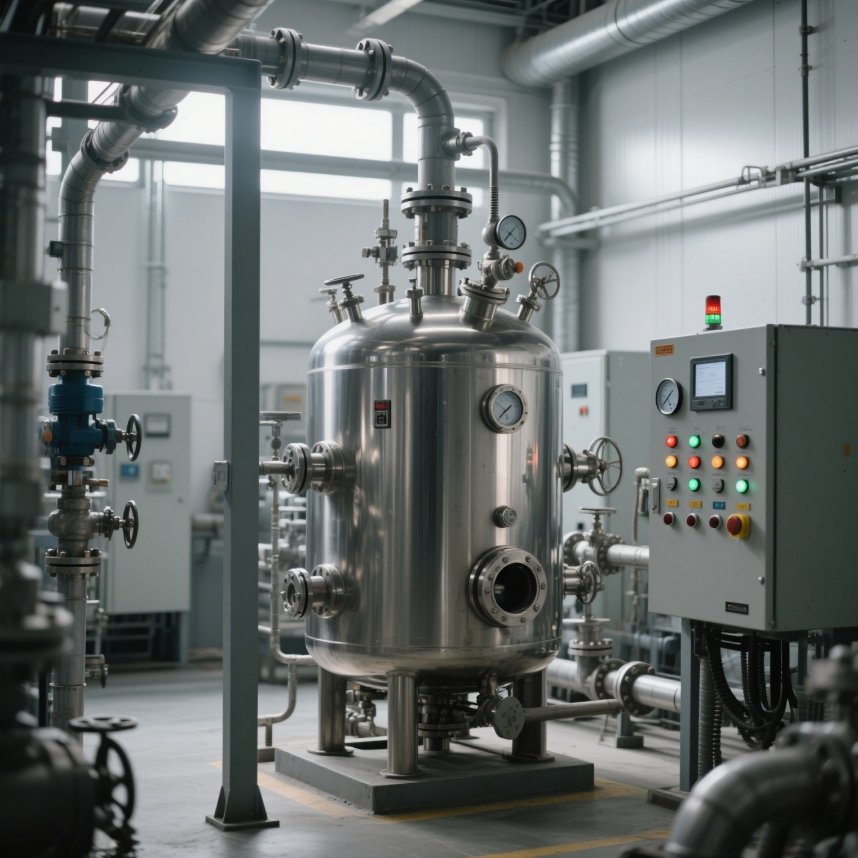
Acrylate polymer is developed by E Plus Chemical Co.,Ltd. using catalytic polymerization technology, featuring diverse molecular structures. It is designed to meet the differentiated needs of various industries for bonding strength and water resistance. As part of the company's core product system, it supports applications in multiple fields, leveraging the company's technical expertise in polymerization to provide high-performance polymer solutions.
Get A Quote

Advantages

Diverse Molecular Structures

E Plus Chemical Co.,Ltd. builds diversified molecular structures for acrylate polymers through catalytic polymerization technology, enabling them to meet the differentiated needs of different industries.

Meets Varied Industry Requirements

It can meet the different needs of various industries for bonding strength and water resistance, making it applicable in a wide range of fields and enhancing its market adaptability.

Customizable Properties

With the company's OEM customization service, the properties of acrylate polymers can be adjusted according to customer needs, such as modifying the molecular structure to meet specific performance requirements.

Related products

Acrylate polymer properties are diverse and customizable, determined by monomer composition, molecular weight, and crosslinking, enabling their use in a wide range of applications. Mechanical properties include flexibility (enhanced by 2-ethylhexyl acrylate), tensile strength (improved by methyl methacrylate), and elongation at break, which can range from 100% to over 1000% depending on formulation. Adhesive properties—tack, peel strength, and shear resistance—are critical in pressure-sensitive adhesives, with tack increased by soft monomers like butyl acrylate. Chemical resistance, particularly to water, oils, and solvents, is influenced by monomer hydrophobicity; polymers with more alkyl acrylates (e.g., 2-ethylhexyl acrylate) exhibit better water resistance. Thermal properties include a glass transition temperature (Tg) that varies from -60°C (soft, flexible polymers) to 100°C (hard, rigid polymers), dictating temperature suitability. Optical properties, such as clarity and gloss, make them suitable for coatings and packaging films. Weather resistance, including UV stability and resistance to oxidation, is enhanced by additives like UV absorbers, making them suitable for outdoor coatings. Electrical properties, such as insulation, enable use in electronics. E Plus Chemical Co., Ltd. tailors these properties through advanced catalytic polymerization, adjusting monomer ratios and crosslinking to meet specific needs, ensuring its acrylate polymers deliver consistent performance in adhesives, coatings, and beyond.

Frequently Asked Questions

How are acrylate polymers structured?

Acrylate polymers have diversified molecular structures built through catalytic polymerization technology at E Plus Chemical Co.,Ltd., allowing them to meet different industry needs.
Acrylate polymers can meet the differentiated needs of various industries for bonding strength and water resistance, making them applicable in a wide range of fields.
Acrylate polymers are produced using catalytic polymerization technology at E Plus Chemical Co.,Ltd., which ensures their high quality and stable performance.
Yes, with the company's OEM customization service, the molecular structure of acrylate polymers can be adjusted according to customer needs to meet specific performance requirements.
Acrylate polymers are an important part of the company's core product system, supporting various industrial applications and enhancing the company's comprehensive service capabilities in the acrylic chemical field.

Related Articles

Octyl Acrylate: Key Properties and Industrial Uses

17

Jul

Octyl Acrylate: Key Properties and Industrial Uses

Core Chemical Properties of Octyl Acrylate Octyl acrylate Octyl acrylate, or 2-octyl acrylate, is an acrylate ester monomer with the molecular formula ĈH̊O̊, a molecule of eight-carbon alkyl chain attached to a hydroxyl group and the characteristic...
View More
Advantages of Acrylic Waterborne Resin Emulsion in Textiles

21

Jul

Advantages of Acrylic Waterborne Resin Emulsion in Textiles

Article The introduction of acrylic waterborne resin emulsions has been a radical change in polymer chemistry in the last decade, replacing solvent-based systems with sustainable counterparts. These emulsions are based on water as the continuous pha...
View More
E Plus Chemical conducts emergency simulation drills for sudden scenarios to strengthen the safety and ecological defense line

04

Jul

E Plus Chemical conducts emergency simulation drills for sudden scenarios to strengthen the safety and ecological defense line

View More

Octyl Acrylate: Key Properties and Industrial Uses

23

Jul

Octyl Acrylate: Key Properties and Industrial Uses

Explore the molecular structure, thermal stability, and diverse applications of 2-Ethylhexyl Acrylate. Discover its role in adhesive production and automotive applications while understanding market trends and sustainability challenges in acrylate polymers.
View More

Customer Reviews

Steven Chen
Diverse Structures Meet Industry Needs

The varied molecular structures of their acrylate polymers let us choose the perfect fit for each application—from high-bond-strength adhesives to water-resistant coatings. It’s a versatile solution.

Paula Wright
Consistent Quality in Large Batches

Even with large orders, the polymer’s properties stay consistent. This reliability is crucial for our mass production, and it’s reduced the need for rework, saving us time and money.

Get a Free Quote

Our representative will contact you soon.
Email
Mobile/WhatsApp
Name
Message
0/1000
Part of Integrated Industrial Chain

Part of Integrated Industrial Chain

Being part of the integrated industrial chain from monomer synthesis to finished product delivery, acrylate polymers benefit from efficient production and quality control, ensuring reliable supply for customers.