 EN
EN

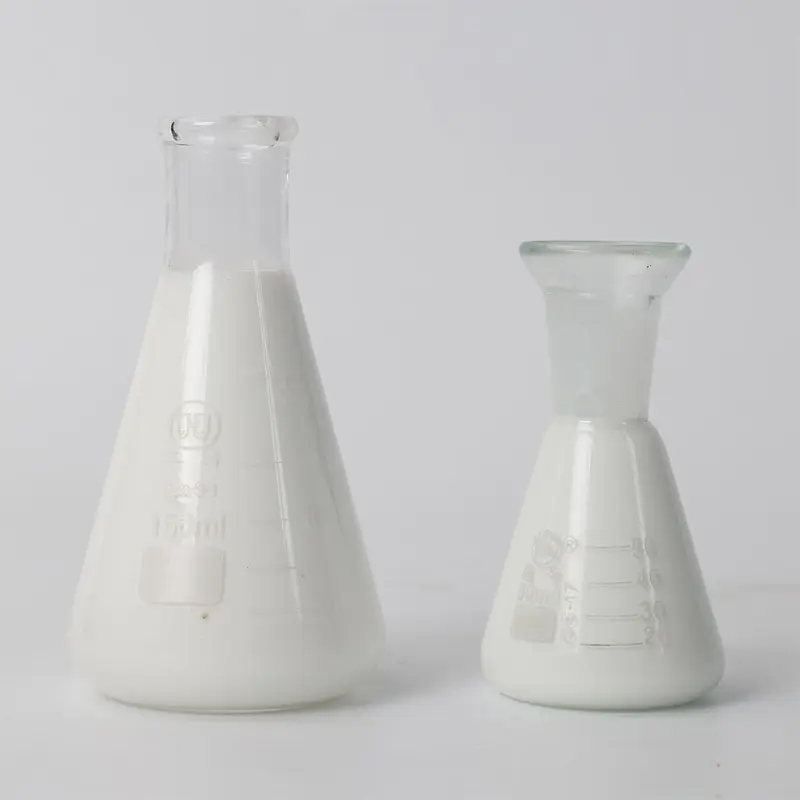
The Role of 2-EHA as a Soft Monomer in Acrylic PSAs
2-EHA (2-ethylhexyl acrylate) is the most widely used soft monomer in acrylic pressure-sensitive adhesive formulations. Its homopolymer glass transition temperature (Tg) of -65°C to -70°C imparts permanent tack, flexibility, and low-temperature adhesion. The long branched C8 alkyl side chain disrupts polymer chain packing, creating free volume that allows the adhesive to flow and make intimate contact with the substrate — the physical basis of tack. Without 2-EHA, an acrylic PSA becomes a hard coating with no stick.
Glass Transition Temperature, Chain Flexibility, and Wet-Out Behavior
The Tg of 2-EHA (-70°C) is significantly lower than n-butyl acrylate (-54°C). This 16°C difference means a 2-EHA-based copolymer at room temperature has higher chain mobility, faster substrate wet-out, and higher initial tack. The trade-off: the branched C8 chain provides less intermolecular friction than the linear butyl chain, so cohesive strength is lower. For high tack on low-energy surfaces like polyethylene, 2-EHA is preferred. For removability and clean peel, n-BA or a blend with higher n-BA fraction works better.
Real-World Case — A Label Adhesive Reformulation
A label converter producing clear-on-clear labels for glass beverage bottles experienced winter adhesion failure — labels peeled when bottles moved from 4°C to 22°C, creating condensation at the label-substrate interface. The adhesive used a 50/50 2-EHA/n-BA blend with MMA and acrylic acid. E Plus Chemical, a manufacturer specializing in 2-EHA and acrylic waterborne resin since 2012, reformulated the adhesive by increasing 2-EHA from 50% to 70% of the soft monomer component, shifting the copolymer Tg from -22°C to -28°C. Inhibitor content was reduced from 50 ppm MEHQ to below 15 ppm. Low-temperature adhesion improved from 2.8 to 5.1 N/25mm at 5°C. Edge peel failures in winter stopped.
Monomer Ratio Design — The Hard-Soft-Functional Balance
2-EHA to Hard Monomer Ratios and Their Effect on Tack, Peel, and Shear
At 60% to 70% 2-EHA with MMA (Tg=105°C) as hard monomer and acrylic acid (2% to 5%) as functional monomer, the copolymer delivers loop tack of 8 to 15 N/25mm and 180° peel on stainless steel of 10 to 18 N/25mm — suitable for permanent labels and packaging tapes. At 45% to 55% 2-EHA, tack decreases but holding power at 1 kg load and 40°C exceeds 24 hours versus 4 to 8 hours for the higher-tack formulation. The functional monomer (acrylic acid at 1% to 5%) provides crosslinking sites and polar adhesion. Too little and the polymer lacks integrity; too much raises Tg and reduces tack.
Polymerization Parameters That Affect Final Adhesive Performance
Feed Profile, Inhibitor Content, and Molecular Weight Distribution
Monomer ratio alone does not determine adhesive performance — the polymerization process controls monomer distribution along the copolymer chain. A starved-feed semi-batch emulsion polymerization of 2-EHA with hard monomers produces a homogeneous composition. In batch processes, reactivity ratio differences (r≈0.2 with MMA) cause compositional drift — early chains rich in one monomer, late chains rich in another. Inhibitor content — typically MEHQ at 10 to 50 ppm — reduces polymerization rate and broadens molecular weight distribution. E Plus Chemical supplies 2-EHA with inhibitor below 15 ppm. Chain transfer agent controls molecular weight: fractions below 50,000 g/mol add tack but reduce shear; above 500,000 g/mol build cohesive strength.
Testing Tack — Methods That Predict Real-World Performance
Loop Tack, Probe Tack, and Rolling Ball Tack — What They Measure and What They Miss
Loop tack (ASTM D6195) measures peel force after brief contact — correlating with label-on-bottle application. Probe tack (ASTM D2979) measures withdrawal force from controlled contact. Rolling ball tack (PSTC-6) measures distance a steel ball travels — predictive for finger-tack feel. None measures long-term adhesion development — a 2-EHA-based PSA builds bond strength over 24 to 72 hours as polymer chains flow into substrate micro-roughness. Performance testing on the actual substrate under actual conditions is irreplaceable.
Frequently Asked Questions
What monomer ratio of 2-EHA gives the best tack?
A soft monomer fraction of 60% to 70% 2-EHA with methyl methacrylate as the hard monomer delivers the highest loop tack (8 to 15 N/25mm) for permanent applications. E Plus Chemical provides technical guidance on monomer ratio optimization for specific application requirements.
How does 2-EHA compare to n-butyl acrylate for adhesive tack?
2-EHA (Tg -70°C) provides higher initial tack and better low-temperature adhesion than n-BA (Tg -54°C). The trade-off is lower cohesive strength. A 2-EHA/n-BA blend balances tack and shear for removable applications.
What inhibitor level in 2-EHA is best for polymerization?
2-EHA with MEHQ inhibitor below 15 ppm enables faster polymerization initiation, more consistent molecular weight, and reduced induction period compared to 50 ppm standard grades. E Plus Chemical supplies low-inhibitor 2-EHA.
How does the polymerization method affect adhesive properties?
A starved-feed semi-batch emulsion polymerization of 2-EHA produces homogeneous copolymer composition. Batch processes cause compositional drift — early chains rich in one monomer, late chains rich in another — producing inconsistent adhesive performance.
How is 2-EHA-based PSA tack measured?
Loop tack (ASTM D6195), probe tack (ASTM D2979), and rolling ball tack (PSTC-6) measure 2-EHA-based PSA tack. Loop tack best predicts label-on-bottle application; probe tack measures surface stick; rolling ball correlates with finger-feel.
What functional monomer should be used with 2-EHA?
Acrylic acid at 2% to 5% in a 2-EHA copolymer provides crosslinking sites and polar substrate adhesion. Methacrylic acid offers better water resistance. Too much functional monomer raises Tg and reduces tack.