 EN
EN

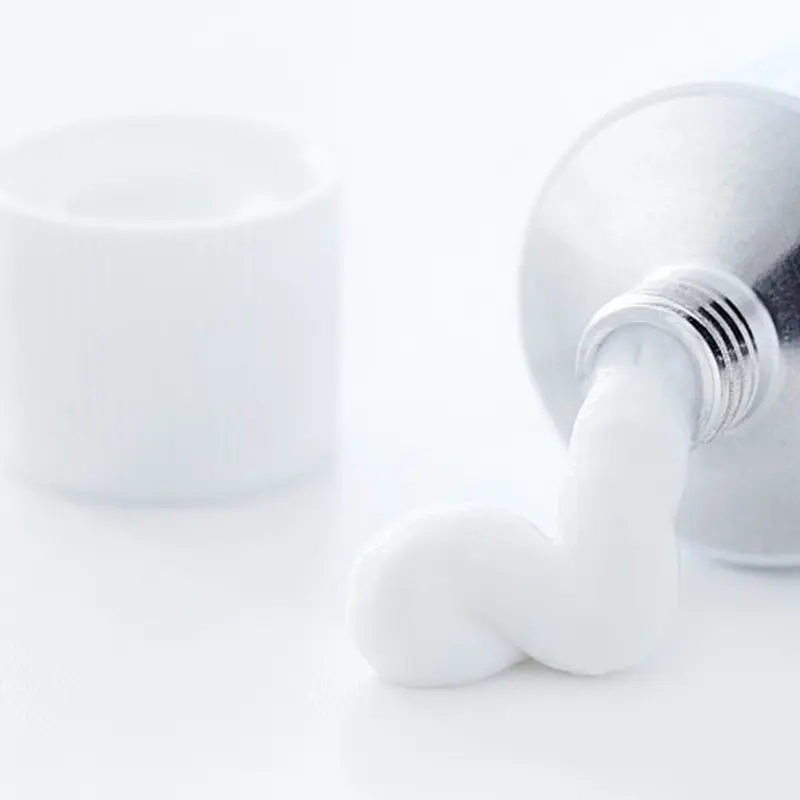
Why Waterbased Acrylic Pressure Sensitive Adhesive Is Preferred in Modern Electronics
Regulatory and Sustainability Drivers: RoHS 3, IPC-1402, and VOC Reduction Imperatives
More and more electronics makers are turning to water based acrylic pressure sensitive adhesives these days as they try to keep up with stricter environmental rules and their own green initiatives. They need to follow standards like RoHS 3 which bans stuff like lead, cadmium, and some bad phthalates, plus IPC-1402 that sets the bar for eco friendly materials in electronics manufacturing. These regulations basically force companies to get rid of heavy metals, those harmful halogen compounds, and anything with high levels of VOCs. Water based acrylic PSAs have under 5% VOC content compared to solvent based options that can hit 40 to 60%, so there's way less pollution when applying, drying, or getting rid of them later on. Plus, since they're water based, there's no risk of contaminating groundwater and cleaning up after production becomes much easier. About 9 out of 10 electronics companies now want suppliers certified under ISO 14001 anyway, so using these adhesives helps support circular economy goals too. Products made with them can be recycled safely at the end of life and valuable materials recovered without sacrificing how well the products actually perform.
Performance Advantages: Optical Clarity, Low Ionic Impurities, and Thermal/Humidity Stability
Beyond regulatory alignment, waterbased acrylic PSAs deliver functional superiority essential for next-generation electronics. Three interdependent properties underpin their reliability in demanding applications:
- Optical clarity: Achieves >99% light transmission with <0.5% haze-critical for display laminations where scattering degrades contrast and brightness.
- Ionic purity: Contains <10 ppm sodium/potassium ions, mitigating electrochemical migration that causes dendrite growth and short circuits in high-density circuitry.
- Environmental resilience: Maintains bond integrity for over 1,000 hours under 85°C/85% RH stress-outperforming silicone PSAs by 30% in humidity resistance.
The acrylic polymer backbone delivers stable dielectric properties across -40°C to 150°C and exhibits <5% adhesion loss after 500 thermal cycles. Its low-modulus variants further absorb differential thermal expansion stresses in multilayer assemblies-preventing delamination and microcracking in miniaturized, high-power devices.
Display Module Bonding with Waterbased Acrylic Pressure Sensitive Adhesive
Waterbased acrylic PSA enables precision, solvent-free lamination in display manufacturing-eliminating outgassing risks that cloud optics or degrade thin-film layers over time.
Optical Lamination: Achieving >99.5% Clarity and <0.5% Haze Retention in LED Backlight Units
The adhesive delivers exceptional optical performance with over 99.5% clarity and less than 0.5% haze, which makes all the difference when it comes to getting good results from LED backlights. What's really impressive is how well its refractive index works with standard display materials, sitting right between 1.48 and 1.52. This match helps prevent those annoying light scatter issues at interfaces. And here's where things get even better compared to traditional solvent based PSAs. Our product maintains its clarity during tough tests at 85 degrees Celsius and 85% humidity. That means automotive displays can keep performing reliably even after years of going through hot and cold temperature swings on the road.
Substrate Compatibility: Adhesion to ITO-PET, Polarizers, and Anti-Reflective Coatings
Engineered surface energy (32-36 mN/m) ensures robust, defect-free bonding across optically and electrically sensitive layers:
- Conductive ITO-PET films-without inducing microcracks or resistivity shifts
- Polarizer stacks-withstanding dynamic flexing during module assembly and use
- Anti-reflective (AR) coatings-achieving <5° contact angle for uniform wetting and void-free lamination
Crucially, the acrylic chemistry suppresses silver ion migration along conductive traces, preserving electrical isolation even at ultra-thin bondlines (0.2 mm). This compatibility prevents interfacial degradation during thermal expansion-extending display lifespan and yield.
Flexible Printed Circuit (FPC) Assembly Using Waterbased Acrylic Pressure Sensitive Adhesive
EMI Shielding Tape Bonding on Curved FPCs Under Extreme Thermal Cycling
Water based acrylic PSA creates strong conductive connections between EMI shielding films and those tricky curved FPC substrates, even when subjected to extreme thermal shocks. This material can handle over 5000 temperature cycles ranging from minus 40 degrees Celsius all the way up to 125 degrees Celsius without any delamination issues. That's way beyond what traditional solvent based adhesives manage before failing around the 500 cycle mark. The viscoelastic properties help maintain constant conductivity through sudden temperature changes. This matters a lot in industries like aerospace and automotive manufacturing where differences in how materials expand with heat create significant stress at the interface points between components.
Low-Modulus Conformal Lamination: Preventing Creep and Delamination at High Temperatures
This pressure sensitive adhesive has a storage modulus under 0.1 MPa which means it can handle mechanical stress really well when dealing with tight bends and places where different materials meet like polyimide going into copper. One big plus is that it stops creep deformation from happening something that usually causes problems in those high temperature flexible printed circuit board bonds. The material stays intact even after being exposed to conditions around 85 degrees Celsius and 85% humidity for long periods of time. Plus there's almost no ionic contamination keeping levels below 5 parts per million. That low level prevents electrochemical migration issues at high voltage connections where even tiny amounts of impurities could lead to dangerous arcing or corrosion down the road.
Battery and Sensor Integration Enabled by Waterbased Acrylic Pressure Sensitive Adhesive
Pouch Cell TIM Fixation: Ionic Purity Control (<5 ppm Na°/K°) for Electrolyte Compatibility
Water based acrylic PSA works really well for fixing thermal interface materials (TIMs) inside lithium ion pouch cells without messing with the electrolyte chemistry. What makes this material stand out is its super low ionic impurities - less than 5 parts per million of sodium and potassium ions. This level actually goes beyond what's needed for standard battery grade materials. According to research from 2023, using this stuff cuts down on electrolyte breakdown and those dangerous dendrites forming by about two thirds compared to traditional solvent based options. The adhesive holds up nicely too, maintaining good bond lines even when compressed at over 15 pounds per square inch. Plus, it keeps TIM thermal conductivity above 1.2 watts per meter Kelvin. And here's something interesting: because it has a neutral pH, it helps prevent electrode corrosion even in extreme situations where temperatures might spike past 150 degrees Celsius during thermal runaway events.
MEMS Encapsulation: Acoustic Transparency and Hydrophobic Surface Energy Tuning (28-32 mN/m)
When it comes to MEMS sensor encapsulation, these PSAs allow almost perfect sound transmission with less than 3 dB loss between 20 Hz and 20 kHz frequencies. This means better quality signals for microphones and ultrasonic sensors alike. The surface energy has been carefully adjusted to fall within 28-32 mN/m range. This gives them natural water resistance properties that keep moisture away without any silicone migrating over time. As a result, they maintain over 99.5% stability even when exposed to repeated condensation cycles. These materials also dampen vibrations significantly, cutting down mechanical noise by as much as 40 dB in accelerometers applications. Plus, they hold up against pretty severe shocks too, resisting peeling even at ±15G forces. And there's something else worth mentioning about their gas permeability characteristics. They actually prevent pressure build up inside sensor cavities when altitudes change rapidly, which makes them particularly valuable for barometric pressure sensors and other types of inertial measurement devices.
Are you looking for a reliable partner to meet your high-performance adhesive needs? E Plus Chemical Co.,Ltd provides comprehensive custom OEM/ODM services for water-based acrylic resins. If you have specific formula ideas or need custom water-based acrylic pressure-sensitive adhesives tailored to your unique temperature and performance requirements, our expert team is ready to assist you and provide professional formula processing services.
FAQs
What are the environmental benefits of using waterbased acrylic pressure sensitive adhesives?
Waterbased acrylic PSAs reduce pollution due to their low VOC content of under 5%, compared to solvent-based options with up to 60% VOCs. They also eliminate groundwater contamination risks and simplify cleanup processes after production.
How do waterbased acrylic PSAs enhance performance in electronics?
They offer superior optical clarity, low ionic impurities, and excellent thermal/humidity stability. These properties ensure better reliability and long-lasting performance in various electronic applications.
In what applications can waterbased acrylic PSAs be used?
Waterbased acrylic PSAs are suitable for use in display module bonding, flexible printed circuit assembly, battery and sensor integration, among other applications demanding precision and reliability.
Table of Contents
- Why Waterbased Acrylic Pressure Sensitive Adhesive Is Preferred in Modern Electronics
- Display Module Bonding with Waterbased Acrylic Pressure Sensitive Adhesive
- Flexible Printed Circuit (FPC) Assembly Using Waterbased Acrylic Pressure Sensitive Adhesive
- Battery and Sensor Integration Enabled by Waterbased Acrylic Pressure Sensitive Adhesive
- FAQs